



Once you have found and rented the right storage unit, it is time to actually get everything packed up properly. It's tempting to just grab whatever boxes are lying around and start stuffing things in, but using the wrong storage materials (or skipping them altogether) is one of the fastest ways to end up with damaged belongings, wasted space, and a storage unit that's more chaotic than helpful. Let's explore the essential storage materials, what they're actually for, and a few things you can skip.
The Essentials: What Every Storage Unit Needs
Sturdy Moving Boxes in Multiple Sizes
Flimsy grocery store boxes are fine for a short-distance move, but they're not built for long-term storage. They can buckle under weight, collapse over time, and attract moisture more easily than purpose-built moving boxes. Use a mix of sizes:
Small boxes for heavy items like books, tools, canned goods, and dishes
Medium boxes for clothing, small appliances, and general household items
Large boxes for lightweight or bulky items, like pillows, comforters, and lamp shades
Wardrobe boxes for hanging clothing you want to keep wrinkle-free
Resist the urge to pack everything into large boxes. Heavy items in large boxes are back-breaking to move and more likely to cause the box to give out at the bottom.
Packing Tape and a Good Tape Gun
Cheap tape peels, fails in temperature changes, and leaves residue everywhere. Invest in quality packing tape that's at least 2 inches wide, and use a tape gun. It sounds minor, but taping dozens of boxes by hand without one is genuinely miserable.
Seal every box on the bottom with at least two strips of tape, and do the same on the top. For heavier boxes, run a strip down each side seam as well. A well-taped box holds its shape, keeps moisture out, and stacks more safely.
Bubble Wrap and Packing Paper
Bubble wrap and packing paper work together to protect your items. While they may seem similar, they serve different purposes:
Packing paper is your everyday wrap for dishes, glasses, small décor, and anything that needs a layer of protection without adding too much bulk. It's also great for filling space inside boxes to prevent shifting.
Bubble wrap is for the fragile stuff, like mirrors, picture frames, ceramics, electronics, and anything with a screen. Wrap each item individually, and don't be stingy (especially on your most treasured, valuable, or sensitive items).
A note on newspaper: it works in a pinch, but the ink transfers and can stain lighter-colored items. For long-term storage, plain packing paper is worth the small extra cost.
Furniture Covers and Moving Blankets
If you're storing any furniture (sofas, chairs, dressers, mattresses), don't skip this step. Dust accumulates, and without covers, upholstered pieces are vulnerable to it (and to any moisture in the air).
Furniture covers (plastic or fabric) protect sofas, chairs, and tables from dust and minor moisture.
Moving blankets are thicker and better for protecting wood surfaces, corners, and anything prone to scratching.
If you're storing a mattress, mattress bags can keep dust, moisture, and pests out.
You don't need to wrap every single item, but anything upholstered, wooden, or with a finish worth protecting should be covered.
Stretch Wrap (Plastic Film)
This inexpensive roll of cling film is surprisingly useful in storage. Use it to:
Bundle furniture legs, chair backs, or awkward shapes together for easier stacking
Wrap dresser drawers in place so they don't slide out
Keep cabinet doors closed during transport and storage
Protect surfaces that aren't going in a box
It's not a replacement for padding, but as a secondary layer or a bundling tool, it earns its place in your packing kit.
Permanent Markers and Labels
Good labeling costs almost nothing and saves an enormous amount of time when you need to find something months down the road. Use thick permanent markers to label every box on multiple sides. You may also consider using a color-coding system by room or category, and consider keeping a master inventory list. Read more in our guide, 10 Tips on Labeling Storage Boxes for Easy Access Later.
Specialty Storage Materials Worth Considering
Climate Protection for Sensitive Items
If your storage unit isn't climate-controlled, certain items need extra protection against temperature swings and humidity:
Silica gel packets placed inside boxes help absorb moisture, especially useful for electronics, photos, books, and wooden items.
Vacuum storage bags compress bulky soft items like blankets, duvets, and seasonal clothing, while also sealing out humidity and pests.
Acid-free boxes and tissue paper are ideal for storing photographs, important documents, artwork, and clothing you want to preserve long-term (standard cardboard is slightly acidic and can damage paper and fabric over time).
If you're storing anything truly irreplaceable (family photos, heirloom clothing, original documents), these materials are worth the extra investment and effort.
Furniture Risers or Pallets
If you're storing in a unit that could be at risk for ground moisture (such as a non-climate-controlled drive-up unit), placing furniture and boxes on wooden pallets or plastic risers keeps them off the concrete floor. Even a small amount of ground moisture can seep up over time, and this simple step adds a meaningful layer of protection.
What You Can Skip (Or Get For Free)
Some of the best storage materials are things you already own or can get for free. Others, you may be able to skip entirely:
Egg cartons and towels make decent padding for fragile items in a pinch.
Clothing and linens can double as wrapping for dishes and breakables, which also saves box space.
Liquor store boxes are some of the sturdiest free boxes out there, and many stores will set them aside for you if you ask.
Feel free to skip styrofoam peanuts entirely. They're messy, they shift around, and crumpled packing paper does the job just as well.
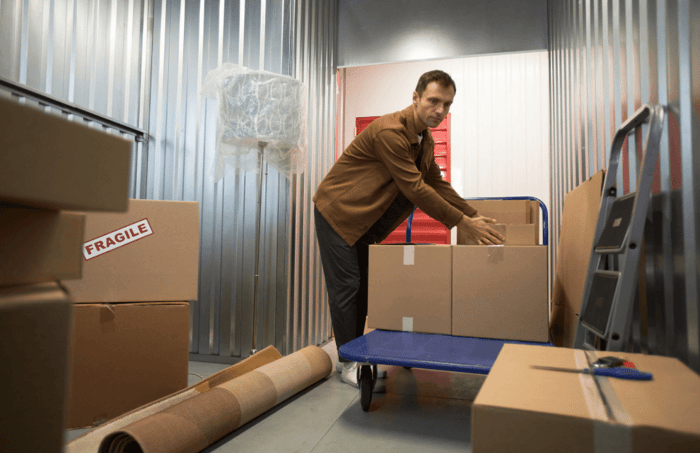
If you are storing at a high-quality facility (like Bluebird), you will also find moving tools like dollies and handcarts available for you to use for free.
Bluebird Storage Units and Self Storage Materials
Having the right storage materials makes a huge difference, but so does having the right storage unit. At Bluebird Storage, our facilities are designed to make storing your belongings as easy and secure as possible. Many locations offer climate-controlled units, drive-up access, indoor unloading areas, and extended access hours, so your stuff is protected and reachable when you need it.
We also carry moving and packing supplies at our facilities, so if you realize mid-move that you're short on boxes or bubble wrap, we've got you covered.
Find a Bluebird Storage location near you to get started today. With the right unit and the right materials, you'll be set up for a stress-free storage experience from day one.