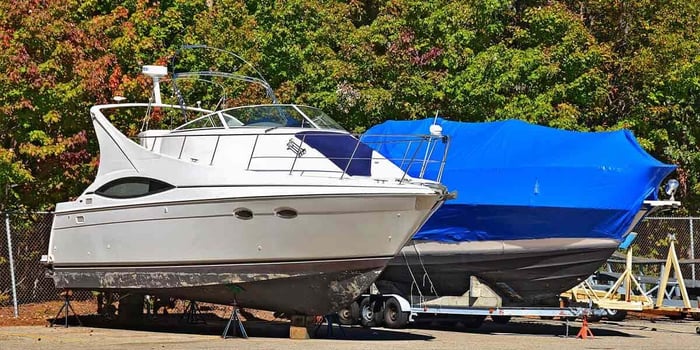





Canadian winters are hard on boats in ways that owners in milder climates never have to think about. Water expands by about 9% when it freezes, and if that water is sitting in your engine block, that expansion is strong enough to crack metal. Add in road salt, freeze-thaw cycles, and months of rodents looking for a warm place to nest, and it becomes clear that proper boat storage is essential.
Here's how to prepare your boat for the off-season, and what to do with it once it's ready.
The Importance of Boat Storage Prep
Skipping winterization nickel-and-dimes you every spring. Cracked engine blocks, corroded fittings, mildew-soaked upholstery, and fuel systems gummed up by degraded ethanol are the most common (and most avoidable) repair bills boat owners face each April.
Thankfully, none of this requires marine-mechanic-level expertise. It just requires doing it in the right order, before the first real freeze.
The Exterior: Protect the Shell
Your hull and topsides take the brunt of winter's mood swings, so this is where prep starts.
- Wash thoroughly, especially if you've been in salt water. Residue left on the hull accelerates corrosion over the winter months.
- Wax the entire exterior. A good wax layer offers a barrier against moisture and UV damage, even in the off-season.
- Inspect the hull for cracks, blisters, or soft spots while it's easy to access. These issues are far cheaper to fix now than after freeze damage makes them worse.
- Cover it properly. A shrink-wrap or heavy-duty cover, secured tightly, keeps snow load and moisture off your investment all winter.
The Engine: The Greatest Risk for Freeze Damage
This is the step people are most tempted to skip, and the one that causes the most heartbreak. A frozen, cracked engine block is one of the most expensive repairs a boat owner can face, and it's almost always preventable.
- Flush the engine and cooling system, then replace coolant with the correct marine-safe antifreeze concentration for your climate zone.
- Change the oil and filter. Used oil holds contaminants and moisture that can corrode internal components over a long winter of sitting still.
- Stabilize or drain the fuel. Ethanol-blended gas absorbs moisture and degrades over time, leaving behind a gummy residue that clogs carburetors and injectors. Run a high-quality fuel stabilizer through the system before storing it for the winter.
- Disconnect the battery and place it in climate-controlled storage to avoid it getting drained or damaged from the cold weather.
- Check your owner's manual for model-specific steps, as different brands, inboard, outboard, and stern-drive engines can have their own quirks.
The Interior: Where Mold and Mice Move In
Issues like mold, mildew, and rodents are common for boat owners who ignore their interior before storage. Unfortunately, once they settle in, it can be hard to get rid of the smell, and it may take a while before your boat feels like your own again. Thankfully, there are some steps you can take to protect your interior during boat storage, including:
- Vacuum and wipe down all interior surfaces before storage.
- Remove any extra cushions, canvas, and fabric that could trap moisture or attract pests. Ideally, your boat storage will also have seasonal indoor storage units or lockers where you can keep extra items for the winter.
- Place moisture absorbers throughout the cabin to head off mold growth during humid stretches.
- Clear out food, electronics, and anything you'd rather not find chewed through or freeze-damaged come spring.
Where to Store Your Boat in the Winter
Prep is only half the job. Your boat still needs somewhere safe to sit for five or six months. In Canada, boat owners generally choose between three options, and each comes with real trade-offs:
- Leave it at the marina. Convenient if your marina offers it, but off-season marina storage tends to book up early and often comes at a premium, especially for larger vessels.
- Store it at home. While technically free, a boat parked in the driveway all winter eats up space you'll want back, and it's exposed to weather, theft, and municipal bylaws in some areas that restrict long-term driveway storage.
- Use an outdoor storage facility. Purpose-built lots offer secure, monitored space without tying up your own property or competing for a marina spot.
For a lot of Canadian boat owners, that third option ends up being the sweet spot. You get dedicated space, security, and your driveway back, without the marina pricing.
What to Look for in a Boat Storage Facility
Not all outdoor lots are created equal. Before you commit, it's worth checking for:
- Year-round accessibility. You shouldn't need an appointment to check on your boat or pull it out early on a warm March weekend.
- 24/7 monitoring and gated access, so your boat isn't just sitting in an open lot.
- Transparent, predictable pricing. Find rates that don't jump the moment you're locked in for the season.
- No long-term contracts, in case your plans (or your boat) change.
- Room for the whole setup, ideally with available accommodations for your trailer, boat, and accessories like kayaks or jet skis in one spot.
Bluebird Storage, for example, offers secure outdoor boat storage at select facilities across Alberta, Ontario, Nova Scotia, and Quebec, with 24/7 video monitoring, gated access, and no rent increases for 365 days. Locations like Chestermere and Edmonton in Alberta, Orangeville and Scarborough in Ontario, Truro in Nova Scotia, and Saint-Nicolas in Quebec all offer dedicated boat parking built for exactly this season.
A Quick Pre-Storage Checklist
Before you drop the boat off anywhere, run through this last pass:
- Hull washed, waxed, and inspected
- Engine flushed, oiled, and fuel stabilized
- Interior cleaned, cushions removed, moisture absorbers placed
- Cover or shrink-wrap secured tight
- Battery disconnected or removed (a battery left connected all winter is a dead battery come spring)
Choose Bluebird: Boat Storage Near Me
How you winterize your boat is often the difference between a smooth launch in May and an unplanned trip to the marine mechanic. If you do the prep work and pick a boat storage option that protects your investment, you'll be more likely to spend next spring on the water instead of in a repair shop.
Explore Bluebird's outdoor boat storage near you. You can also find a Bluebird Storage near you, take a virtual tour, or contact us to get started today!